
Local delivery
starting at $79.00
starting at $79.00
starting at $79.00
starting at $79.00
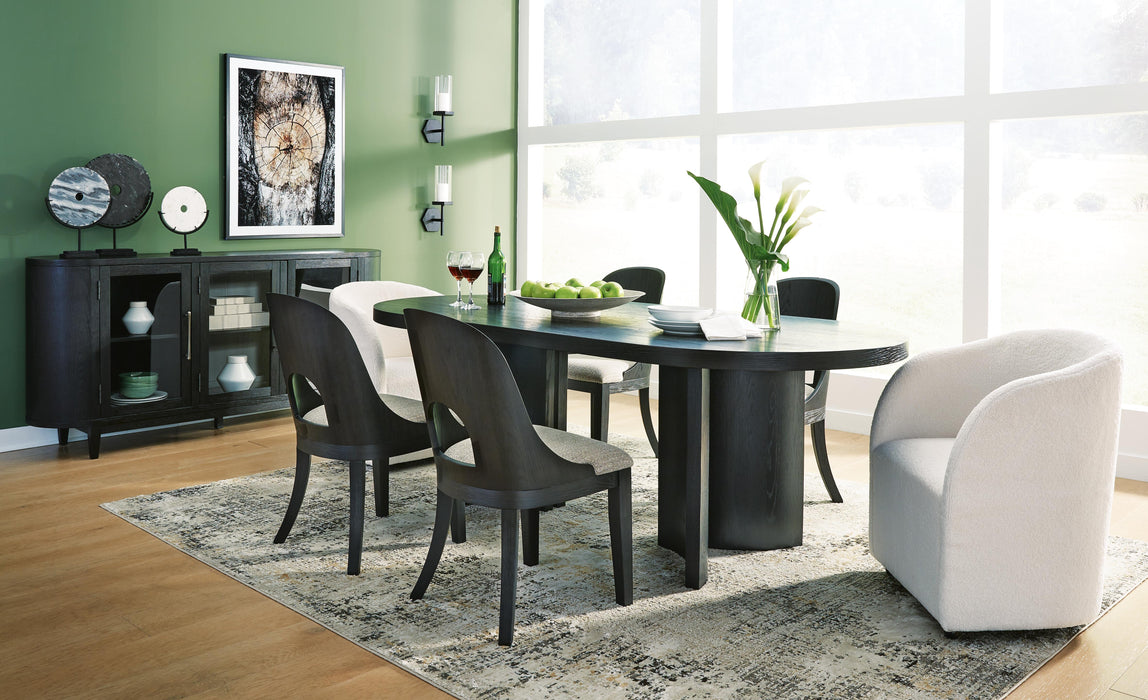
Compact dining tables (round, oval, drop-leaf, and extendable) are the fastest way to free up floor space in a small dining room or dining nook.
Swapping bulky chairs for a slim dining bench, stackable chairs, or stools can instantly maximize seating without crowding the room.
Multifunctional furniture like storage benches and fold-out consoles lets one dining area work as a dining zone, office, and hobby space.
Light materials, slim profiles, and simple layouts make any small dining space feel larger, even if the square footage doesn’t change.
Following practical measuring rules, like maintaining 36 inches (900mm) of clearance, helps you confidently choose the right furniture.
Most homes built or renovated in recent years don’t include a dedicated dining room. Instead, you get a small dining nook off the kitchen, a corner of the living room, or an awkward strip between the sofa and the balcony door. This is the reality for studio apartments, open-plan kitchen–living spaces, and countless other layouts where a formal dining room simply doesn’t exist.
The good news? With the right dining furniture, even a 6x6 ft (about 1.8 x 1.8 m) corner can become a comfortable dining zone for everyday meals and the occasional dinner party. The trick lies in choosing compact, flexible pieces and arranging them strategically.
This article walks you through the process: measuring your dining space first, selecting the right compact dining table shape, picking smart seating, adding multifunctional furniture, and finishing with layout and styling tricks that make small rooms feel intentional and inviting.
The best way to maximize limited space is to plan the footprint of your dining table and chairs before you start shopping. Too many people buy furniture based on tabletop dimensions alone, then discover it renders their room unusable.
Start by measuring:
Length and width of the available space designated for dining
Height of obstacles like radiators, windowsills, or low wall lights
Door swing widths and the location of adjacent furniture
The clearance rule is critical. Allow at least 36 inches of clearance between the table and walls or other furniture to maintain clear walkways. In a small dining area, it is recommended to allow at least 900mm of clearance around the table to ensure chairs can glide back and guests can move comfortably through the space.
Use painter’s tape or cardboard cutouts to mark a sample dining table and chair arrangement on your floor. This reveals whether circulation actually works. Remember that a typical dining chair projects about 20–24 inches from the table edge when someone is seated and pushed back.
In open-plan layouts, map your main traffic flow between the kitchen, dining zone, and living area. Aim for around 39–40 inches (1000mm) for primary walkways so movement stays smooth and the room doesn’t feel like an obstacle course.
The table shape directly affects how much floor space you keep open or block. Round, oval, rectangular, and square tables each have strengths depending on your room’s dimensions and layout.
Using a round or oval dining table can help maintain open sight lines and facilitate movement in tight spaces, making the area feel larger and more inviting. Round tables are ideal for maintaining flow and flexibility in tight spaces, as they allow for easier movement around the table without sharp corners.
Slim rectangular or square tables can be better for pushing against a wall to save space compared to round tables. When your dining spot sits along a wall or beneath a window bench, these shapes free up the central area.
Quick sizing guide: | Table Size | Seats | Best For | 30–36 in round | 2–3 | Tiny nooks, studio corners | | 36–42 in round | 3–4 | Small dining rooms | | 30 x 48 in rectangular | 4 | Narrow spaces, wall placement | | 47–63 in extendable | 4–6 | Flexible guest capacity |
A 36–42 in (90–105 cm) round dining table is ideal for 2–4 people in a small dining nook or corner of a living room. Using a round table is a good way to create flow and make a space feel larger, as it encourages conversation and connection among diners.
Round pedestal tables are ideal for small dining areas as they eliminate corner legs, providing more legroom and allowing for easier movement around the table. This makes squeezing in an extra chair for an unexpected guest much easier than with a four-legged design.
Place your round table centered on a rug, near a window for natural light, or between a sofa and kitchen island to create a defined dining zone without hard visual barriers.

Extendable dining tables are versatile options for small spaces, allowing for a compact size during everyday use and the ability to expand for gatherings without taking up permanent extra space. You get everyday dining for two or four, then expand to six or more when guests arrive.
Common extension mechanisms include:
Butterfly leaves stored inside the table
Drop-in leaves kept in a closet
Synchronized glides for one-person operation
Look for a table that goes from about 47 inches to 63 inches (120 to 160 cm). This range handles daily meals compactly while providing more room when you need it. Choose a mechanism you can operate alone; fumbling with heavy leaves when the company is arriving defeats the purpose.

Drop-leaf tables can shrink down to a narrow console for everyday use and expand when needed. A table that’s 30 inches deep when open might collapse to just 10–12 inches (25–30 cm) when both leaves are down, functioning as a slim console against the wall between meals.
Wall-mounted or foldable tables can be flipped up for meals and folded flat against the wall, making them ideal for tiny areas. These work beautifully in studio apartments where the same square footage must serve as a living room, dining room, and home office throughout the day.
Gateleg designs offer similar flexibility, with swing-out legs that support the leaves when raised. These are the ultimate space savers for multipurpose rooms where the dining space must regularly convert into a workspace or exercise area.
Choosing seating is as important as choosing the table when you want to maximize seating without making the room feel cramped. The wrong chairs can dominate a small room even when the table fits perfectly.
To maximize seating in a small dining room, consider incorporating benches or banquettes, which can fit more people comfortably compared to individual chairs. Armless chairs, stools, and backless options take up less visual and physical space than bulky, upholstered armchairs.
Measure chair widths carefully. Typical dining chairs run 16–20 inches wide. Ensure seats can tuck fully under the dining table to clear walkways, tuck-under chairs prevent walking paths from being obstructed by fitting completely under the table.
Consider mixing seating types: chairs on one side, a dining bench on the other. This adds flexibility and visual interest in a small dining room.
Benches can be fully tucked under a table to save space and work well in tight corners. When not in use, a slim dining bench disappears beneath the tabletop, freeing precious floor space.
A built-in or freestanding banquette along one wall lets the table sit closer to the wall, maximizing seating on one side without needing clearance behind it. A small L-shaped bench set into a corner, often with built-in storage, is a space-saving dining arrangement that creates a cozy breakfast nook feel.
Benches work especially well for rectangular tables in narrow rooms or along windows. Combining seating with hidden storage allows for efficient use of space in dining areas. You get extra capacity plus a place to stash table linens and board games.

Stackable dining chairs or folding chairs can be stored in a closet or corner when not needed for extra guests. Keep two or three chairs for daily use and bring out the extras only when hosting a dinner party.
Backless stools tuck fully under a counter-height or standard-height table, making a micro dining space feel open. Nesting tables and storage benches allow for seating to tuck completely away in compact dining areas.
Lightweight, open-backed chairs visually “disappear” in tight areas, especially useful when the dining zone sits within a larger living area. For compatibility, maintain seat heights around 18 inches for a standard 29–30 inch table.
In small homes, the dining area often doubles as a home office, craft station, or homework spot. The global market for space-saving furniture was valued at around USD 23.4 billion in 2023 and is projected to reach USD 41.2 billion by 2032, driven by the increasing demand for smart solutions in smaller living spaces.
Multifunctional furniture lets the same square footage handle everyday life, eating, working, and relaxing without feeling cluttered. The key pieces include storage benches, sideboards that act as desks, and tables with hidden storage or adjustable heights.
A storage dining bench can hide table linens, board games, or seasonal decor, keeping the dining space visually calm. Lift the seat, stash items inside, and the surface stays clear for sitting.
A slim rolling cart serves as a mobile buffet during meals and tucks into a corner or under a counter afterward. It saves floor space during the week while providing extra space for serving on weekends.
A narrow sideboard or slim console, only about 12–16 inches deep, offers both hidden storage and an auxiliary serving surface without dominating a compact room.

Counter-height dining tables can function as both a breakfast bar and a mini kitchen island for food prep in tiny kitchens. Add casters for mobility, and you can reposition it as needed throughout the day.
A simple rectangular dining table works beautifully as a laptop workspace by day and a dining table by night. Look for features like cable management grommets, smooth surfaces for writing, and durable finishes that withstand both everyday use scenarios.
Align table placement with power outlets and lighting if the dining area will regularly function as a home office. This prevents cord clutter and ensures adequate natural and artificial light for working.
Even without walls, you can visually carve out a dedicated dining zone in an open-plan room. The right layout makes a dining nook feel like a real room rather than leftover space.
Use rugs, lighting, and furniture placement to create clear boundaries between living and dining areas. A sofa back, a low bookshelf, or even a change in flooring material can signal where one zone ends and another begins.
Place the dining table where natural light is strongest, near a window or glass door, to make compact furniture feel inviting. Keep main circulation paths free, especially in homes with kids, pets, or frequent traffic flow between rooms.
A rug that extends at least 24 inches (60 cm) beyond all sides of the dining table helps anchor the dining space and prevents chairs from catching on the edges. This visual grounding makes even the smallest dining zone feel intentional.
A single pendant light or small cluster centered over the dining table creates a focal point and visually marks the dining zone. Keep rug patterns and pendant designs relatively simple in very small rooms to avoid visual clutter.
The rug and light together draw the eye upward and establish breathing room within an open-plan layout, separating the dining spot from adjacent areas.
Place the dining table in an underused corner or along a wall, then build a gallery wall above to make the area feel curated. This draws the eye upward, making the dining room feel taller and less confined.
Wall-mounted shelves or slim cabinets above eye level store glassware and dishes without using floor space. Even the ceiling can contribute; high shelving maximizes vertical space in rooms where every square foot counts.
Keep wall decor cohesive in color so the small dining area doesn’t feel visually busy. Using a cohesive color palette throughout a small dining room can create a sense of continuity and make the space feel larger.
In a limited dining space, the visual weight of furniture matters as much as its actual dimensions. A heavy, dark table can dominate a tiny room, while a visually light piece seems to recede.
Lighter materials, such as glass or light-colored woods, can create an immediate sense of airiness and calm in compact dining spaces. A glass table surface reduces the visual footprint of the room, making it seem less crowded. Furniture with slim legs rather than bulky bases keeps dining areas feeling open.
Materials like ceramic or marble can add a refined durability to dining tables, while lighter wood finishes can help maintain a sense of spaciousness in small areas. The key is matching the material’s visual appeal to your room’s needs.
Choosing lighter colors for walls and furniture can help a small dining room feel more spacious by reflecting natural light and softening visual edges. Whites, pale woods, and glass tops bounce light around, expanding perceived space.
Dark dining tables can still work in small spaces if paired with light walls, pale upholstery, and plenty of reflection from mirrors. Incorporating mirrors into the design of a small dining room can enhance depth and reflect light, making the space feel more open.
Using a light, cohesive color palette for your dining furniture can blur the hard lines of the room, making it feel taller and more open. Limit contrasting colors and materials in a tiny dining nook to maintain visual calm.

Minimal tabletop decor keeps compact dining tables functional for both meals and work. One low vase or small bowl adds organic warmth without blocking sightlines or eating up surface area.
Store placemats, candles, and everyday items in a storage bench, built-in drawers, or sideboard so the dining area doesn’t become a dumping ground. Good storage solutions prevent surfaces from accumulating clutter.
A single large artwork, a small gallery wall, or a mirror adds character without taking floor space. Keep sightlines clear across the table, and avoid tall centerpieces or high-backed chairs in very small rooms.
Image 1: A bright, small dining nook with a 36–40 in round pedestal dining table, three slim armless chairs, and a window seat bench, showing good clearance around the table.
Image 2: A compact extendable rectangular dining table shown both closed (4 seats) and extended (6 seats), demonstrating adaptability.
Image 3: A narrow dining area with a rectangular table against the wall, a dining bench on the wall side, and two slender side chairs, lit by a single pendant.
Image 4: A multifunctional dining space where a simple rectangular table doubles as a home office desk, with a nearby rolling cart and storage bench.
Image 5: Side-by-side mood images of light and dark compact dining furniture, each in a small dining room, showing how color changes the perception of space.
The path to a functional small dining space follows a clear sequence:
Measure your dining area carefully, applying the 36-inch clearance rule
Select a compact dining table shape that suits your room’s dimensions
Choose seating that maximizes capacity without bulk
Add multifunctional furniture and smart storage
Use layout tricks and cohesive styling to make the space feel intentional
Even the smallest dining zone can feel generous with the right furniture mix. Square footage matters far less than thoughtful choices, a 30-inch round table in a bright corner, a bench that tucks away, a pendant that marks the space as distinct.
Treat your dining nook as a true room for connection, not just leftover square rooms between the kitchen and the sofa. The right furniture transforms narrow spaces into places where everyday meals and weekend gatherings happen comfortably.
A 30–36 in (75–90 cm) round table usually seats 2–3 people comfortably, while a 36–42 in (90–105 cm) round table handles 3–4. For rectangular options, aim for around 30 x 48 in (75 x 120 cm) for 4 seats in most compact dining rooms, provided you maintain at least 36 inches of clearance around it. If guests are frequent but daily floor space is tight, an extendable model offers the best flexibility.
Place a compact table near the kitchen to shorten serving distances, ideally close to a window for natural light. The space behind a sofa, along a wall, or in a corner by a balcony door all work well for creating a defined dining nook. For extremely small living–dining combinations, drop-leaf or wall-mounted tables fold away when not in use.
Benches often seat more people along one side of the table and tuck fully under the tabletop when not in use. They work especially well against walls or windows, where you don’t need extra clearance behind the seating. A practical setup pairs a bench on one side with slim chairs on the opposite side for balance and flexibility.
Switch to a round or oval compact dining table, use light colors on walls and furniture, and add a mirror to reflect light and create depth. Declutter surfaces by storing extras in a storage bench or sideboard, and use a single, appropriately sized rug to anchor the space. Replacing heavy, high-backed chairs with lower, open-backed designs opens sightlines instantly.
Combining uses is practical as long as the dining table provides comfortable legroom, adequate height for typing, and a durable surface. A simple rectangular or extendable table paired with ergonomic, slim-profile chairs transitions easily from office to dining mode. Store office supplies in a nearby cabinet or rolling cart so the table can be cleared quickly before meals.

Bring family and friends together in a space designed for comfort and connection when you shop dining room furniture at Pierce Furniture today. The right dining room furniture helps create a welcoming atmosphere for everyday meals, celebrations, and special gatherings. Whether you are looking for dining tables, dining chairs, buffets, or complete dining sets, quality furniture can add both style and function to your home.
Now is the perfect time to update your dining area with furniture that fits your lifestyle and space. Shop dining room furniture at Pierce Furniture today and create a dining room that is comfortable, inviting, and ready for every occasion.
Delivery
Check what it costs to get this order to your door.